Australiana

Lorne, 1939
We were staying at Erskine House in Lorne, a rambling, white, weatherboard guesthouse right on the sea. Across the miles of sea, beyond the deep Prussian-blue stripe at the horizon, lay the mysterious realm of Tasmania. Except for 'rough' older boys who bobbed round beyond the breakers with the surfboards and yelled at each other in common voices, the surf was out of bounds for children. Beyond the wide beach and across the main road were a few shops, selling cakes, pies, sandwiches and newspapers, and the popular milk bar that exhibited on its fascia, a large picture of a polar beer is eating an ice cream cone. I had observed Rosemary one morning reclining on a beach rug, idly chafing her unsandalled, sun-lozenged insteps. She was eating a new kind of ice-cream called a Butterscotch Pie. It was an ice-cream paddle covered with a delicious and brittle shell of butterscotch, which enjoyed a short-lived vogue in the late thirties.
My life as me, 2-3
Melbourne
What I love most of all as a child was to visit department stores in town with my mother. The excursions with my mother often involved tasty luncheons at the Wattle or the Wild Cherry tea rooms, or those other subterranean oases, the Russell Collins, and Elizabeth Collins cafés where we were always greeted by a 'refined' young receptionist in black with a starched white collar, who would show us to a secluded booth decorated with poppies and gum tips. But my favourite was Ernest Hillier's in Collins Street, which offered banana and pineapple sundaes followed by a chocolate 'frappé' (pronounced 'fraip') - a chocolate milkshake with marshmallows. In later years, Raffles, also in Collins Street, was a regular haunt of mine, where we would adjourn after a symphony concert in the Town Hall for those two sophisticated staples of the early fifties, coffee and toasted raisin bread.
My life as me, 8f
The real Australia
'It took moving to Britain for me to learn how to really love Australia'
Australia is the most boring country in the world. That’s what we were taught at school. I attended the most expensive school in the southern hemisphere, and I was educated by the cheapest schoolmasters in Melbourne. They were a collection of dotards and ignoramuses, but the school’s academic reputation was rescued by its generous quota of bright scholarship boys. The headmaster kept a little black book containing the names of boys who had ‘done well’.
It was a very thin little book. Australian history and geography were crammed into a brief period after lunch on Thursday.
We had a house on 30 acres of bush at Healesville,
41 miles from Melbourne, which my parents thought safe in the event of a Japanese invasion, but the wildlife was considered to be the principal danger. Snakes lurked under every log.
The Fitzroy Gardens in Melbourne is the place to see a phenomenon that has vanished from Europe: the elm. Amongst those lovely, reprieved trees in an adjacent park is ‘Captain Cook’s Cottage’. It probably isn’t, but it was brought stone by stone from Yorkshire and reconstructed in the Treasury Gardens. I was present one morning when a lady tourist and her daughter emerged from an inspection of the diminutive dwelling. ‘Well,’ she said rather contemptuously, ‘they say he discovered Australia, but all he had to do was look outside his front door!’
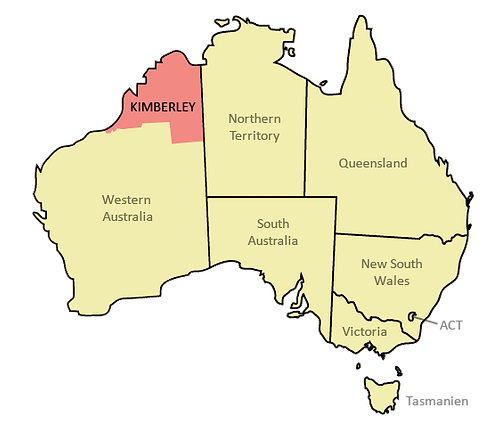
The Kimberley region in the upper north-west, WA, is the real Australia; almost uninhabited, beautiful, wild, a desert in the dry season, savagely beautiful in the wet. And for a taste of the real Australian outback, watch a programme called Outback Truckers, but preferably, take a long holiday and go there
The most spectacular sight in Australia is not the Sydney Opera House, or the Barrier Reef or the great red rock at Uluru. It’s the night sky in the Kimberley. The air is so clean and so uncontaminated by the lights of cities, that you will never have seen so many stars. They pullulate, they swarm, they are, well... awesome, and I employ that worthless epithet correctly.
The Telegraph (London), 15 November 2021
Narooma

My Life as Me, chapter 2
Narooma is a town in New South Wales on the far south coast. The town is on the Princes Highway, which crosses the Wagonga Inlet to North Narooma. The heritage town of Central Tilba is nearby to the south. The name Narooma is said to be derived from a word in the local Aboriginal language (one of the Yuin dialects) meaning "clear blue waters".